.png)
Meetup #5 Review
Working in Japan ③
Resumes, Interviews & Workplace Basics
Review what you learned at the meetup anytime on this page.
Use it when looking for a job or working in Japan!

What You'll Learn
STEP 1
Japanese Resumes
Let's Look at a Japanese Resume
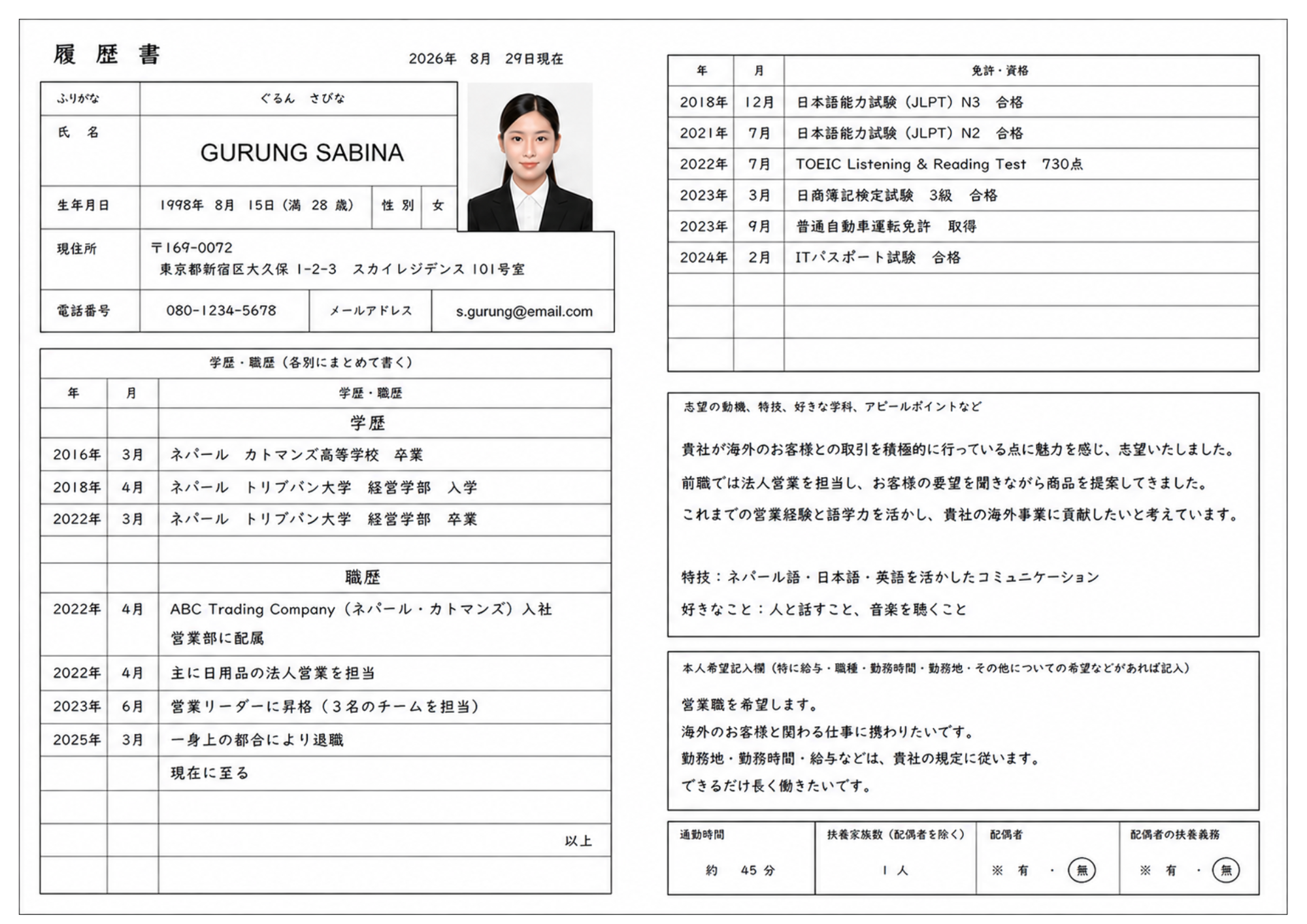
A Japanese resume usually includes your name, address, education, work history, qualifications, and reason for applying. Many Japanese resumes also include a photo.
🔍 View LargerResume vs. Work History
5 Key Resume Tips
01
Basic Information & Photo
- Add the reading of your name in Japanese
- Provide up-to-date contact information
- Use a neat, professional photo
02
Education & Work History
- Use one date format consistently
- Write full school and company names
- End with “Present” and “End”
03
Licenses & Qualifications
- List them in the order you earned them
- Use the official qualification names
- Include the level for JLPT and similar tests
04
Motivation & Strengths
- Why do you want to work for this company?
- How can you use your experience?
- How can you contribute to the company?
05
Before You Submit
- Avoid leaving blank fields
- Check for spelling mistakes
- Double-check company and school names
Important: Don't use the same reason for applying to every company. Tailor it to each company.
STEP 2
Job Interview Basics in Japan
① Prepare Before the Interview

Check the Company & Job
What kind of company is it? What kind of job is it?
Review Your Resume & Application
Review what you wrote, including your experience and skills.

Check the Time, Place & What to Bring
Check how to get there and aim to arrive 5–15 minutes early.

Check Your Appearance
Prepare clean and professional clothing, such as a suit.
② Common Interview Questions
Q1
Please introduce yourself.
Briefly explain your experience and what kind of person you are, not just your name.
Q2
Why did you choose this company and job?
Answer based on your understanding of the company and the job.
Q3
What are your strengths?
Explain your strengths and how you can use them at work.
Q4
What kind of work have you done before?
Explain what you actually did, not just the name of the job.
Q5
How well can you speak Japanese?
Explain not only your qualifications, but also how well you can communicate at work.
③ During the Interview
Speak Politely
Listen Until the Interviewer Finishes
Show That You Are Listening
STEP 3
Workplace Basics in Japan
What's Wrong in This Workplace?

At the meetup, we looked at this illustration and discussed what was wrong and what we should do instead.
1
Arriving Late for Work
Arrive with enough time before work starts. If you will be late, let your workplace know as soon as possible.
2
Working Without Understanding
Don't guess if you're unsure. Ask your supervisor or a senior coworker for help.
3
Playing Games During Work
Follow company rules when using your phone. Don't use it for personal activities while working.
4
Not Reporting a Mistake
If you make a mistake, report it and ask for help as soon as possible.
5
Leaving Without Saying Anything
Say something before you leave, such as “Osaki ni shitsurei shimasu.” Share any important information before going home.
Important at Japanese Workplaces
・Be on time
・Ask when you're unsure
・Follow company rules
・Report mistakes
・Greet and communicate
Need Help with Job Hunting or Interviews?
If you need help finding a job, checking your resume, or preparing for an interview, there are places you can ask for support.
Public Support Services (Free)
You can get advice about job hunting, resumes, and interviews.
Job & Career Services
You can find jobs that match your needs and get support with resumes and interviews.